
Best HydraFacial in Bangalore | Augusté Skin Facial Bangalore
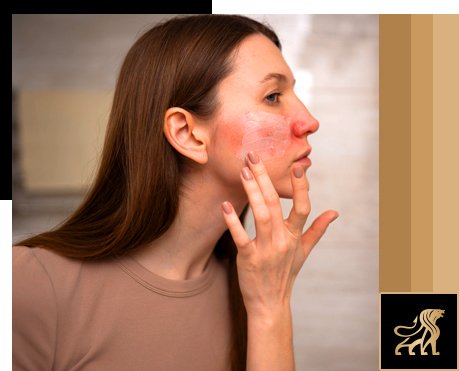
“Barrier repair” has become one of the most overused phrases in skincare marketing, slapped on everything from serums to sunscreens. But a damaged skin barrier is a real, specific condition with real causes — and most of the products claiming to fix it don’t actually contain what a barrier needs to rebuild.
What the Skin Barrier Actually Is
Your skin barrier is the outermost layer of skin, and according to Healthline, it’s crucial for protecting your body from environmental threats while maintaining proper hydration — and when it’s damaged, that can show up as dryness, itching, discoloration, acne, sensitivity, or inflammation. Think of it as a brick wall: skin cells are the bricks, and a mix of lipids — ceramides, cholesterol, and fatty acids — is the mortar holding them together.

What Damages the Barrier in the First Place
A handful of habits are responsible for most barrier damage:
- Over-exfoliating — too many acids, retinoids, or physical scrubs layered together or used too often
- Harsh cleansers that strip natural oils along with dirt
- Hot water and long showers, which break down the lipid layer
- Environmental stress — pollution, extreme weather, and prolonged sun exposure
- Skipping moisturizer after using active ingredients, leaving nothing to help the barrier recover

Most people don’t damage their barrier with one dramatic mistake — it’s usually the slow accumulation of several small habits at once.
Signs Your Barrier Is Actually Damaged
- Skin that feels tight, stings, or burns when you apply products that never used to bother you
- Persistent redness or a flushed appearance that doesn’t fully settle
- Rough, flaky patches alongside oily areas (a damaged barrier can cause both dryness and excess oil at once)
- Breakouts that show up in new places, not your usual congestion zones
- Products that used to work suddenly causing irritation
The Ingredients That Actually Help
According to Healthline’s overview of barrier repair, dermatologists point to moisturizers containing plant oils, ceramides, hyaluronic acid, or petrolatum as the ingredients that genuinely help repair and protect the skin barrier. A closer look at why each matters:
- Ceramides — these make up a significant share of the skin’s natural lipid matrix, and topical ceramides help directly replace what a damaged barrier has lost.
- Cholesterol and fatty acids — these work alongside ceramides as part of the same lipid structure; research on barrier-repair formulations has found that ceramides, cholesterol, and fatty acids used together in the right proportion support recovery more effectively than any one alone. A review in JAAD Reviews reinforces this, noting that moisturizers which supplement these lipids or stimulate the skin’s own production of them are what actually repair barrier function, rather than hydration alone.
- Hyaluronic acid — a humectant that draws water into the skin; it doesn’t rebuild the lipid barrier on its own, but it supports hydration while the barrier heals.
- Niacinamide — supports barrier function while also calming the inflammation that often accompanies barrier damage.
- Petrolatum and other occlusives — these seal in moisture and reduce water loss while the underlying barrier rebuilds itself. AAD.org lists lactic acid, urea, hyaluronic acid, dimethicone, glycerin, lanolin, mineral oil, and petrolatum as other ingredients dermatologists recommend for soothing and repairing compromised skin, alongside ceramides.

Why a Ceramide Low on the Ingredient List Might Not Be Enough
A common mistake is judging a “barrier repair” product purely by whether ceramides appear somewhere on the label. A trace amount of ceramide in an otherwise thin, water-based formula does far less than a well-formulated cream that combines humectants, emollients, and occlusives together. The full formulation matters more than a single headline ingredient.
What to Stop Doing While Your Barrier Heals
Repair only works if you also remove what’s causing the damage. That generally means pausing retinoids, exfoliating acids, and any other active ingredients temporarily, simplifying your routine down to a gentle cleanser, a barrier-supporting moisturizer, and sunscreen, and resisting the urge to introduce something new to “fix” the irritation faster — new actives on an already-compromised barrier usually make things worse, not better.
When to Move Beyond At-Home Care
If your barrier symptoms persist for more than a few weeks despite simplifying your routine, or if you’re not sure whether what you’re dealing with is barrier damage versus an underlying skin condition, that’s a sign it’s worth a professional assessment rather than continuing to guess at products.
How Augusté Skin Can Help
If your skin has been reactive, tight, or unpredictable no matter what you put on it, a professional assessment can identify whether barrier damage is the underlying issue before recommending a fix. Depending on what your skin needs, that could include:
- SensiCalm — a gentle facial specifically designed to calm and repair a compromised skin barrier without heat, steam, or extractions
- Our guide on Open Pores on the Face covers how barrier health affects pore appearance, if that’s part of what’s bothering you
- For ongoing hydration support, our HydraFacial infuses barrier-supporting ingredients as part of the treatment
- If dryness is your main concern, our guide to Best Facial for Dry Skin in Bangalore covers hydration-focused treatment options in more depth

Book a skin assessment with Augusté Skin →
Frequently Asked Questions
1. How long does it take to repair a damaged skin barrier?
It varies, but most simplified-routine approaches show improvement within a few weeks; more significant damage can take longer and may benefit from professional guidance.
2. Can I still use active ingredients while repairing my barrier?
Generally no, at least temporarily — introducing actives on a compromised barrier usually delays healing rather than helping it.
3. Is a damaged barrier the same as sensitive skin?
Not exactly — sensitive skin can be a baseline trait, while a damaged barrier is often a temporary state caused by specific habits or products, though the two can look similar and even overlap.
4. Do I need a professional treatment to fix my barrier, or can I do it at home?
Many mild cases improve with a simplified at-home routine, but persistent or severe symptoms are worth a professional assessment to rule out other causes.
Not sure whether it’s barrier damage or something else? Book a consultation at Augusté Skin and get a routine built around what your skin actually needs.