
Best HydraFacial in Bangalore | Augusté Skin Facial Bangalore
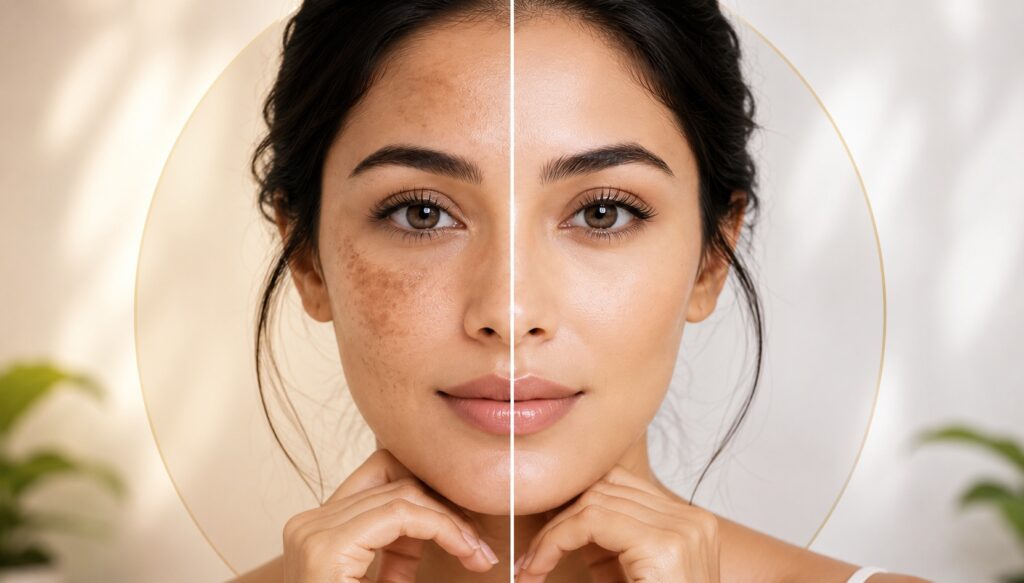
Many people spend months treating the wrong problem.
They buy brightening serums, try chemical peels, invest in expensive treatments and diligently apply sunscreen every morning. Yet despite doing all the “right” things, the pigmentation either refuses to improve or keeps finding its way back.
Often, the reason is surprisingly simple.
What they think is pigmentation may actually be melasma.
And while melasma is a type of pigmentation, it behaves very differently from many of the other pigment concerns we see in clinic.
As a UK-trained Skin Specialist focusing on non-invasive facial procedures, one of the first things I assess at Augusté Skin on Hayes Road in Central Bangalore is not the darkness of the pigmentation, but the type of pigmentation we’re dealing with.
Because understanding the diagnosis often changes the entire treatment plan.
Pigmentation Is An Umbrella Term

Pigmentation isn’t actually a specific condition.
It’s simply a word we use when the skin produces excess melanin, the natural pigment responsible for skin colour.
This excess pigment can appear as:
- Dark spots
- Post-acne marks
- Sun spots
- Freckles
- Uneven skin tone
- Melasma
The challenge is that many of these concerns can look similar to the untrained eye while behaving very differently underneath the surface.
So What Exactly Is Melasma?
Melasma is a chronic pigmentation disorder that usually appears as larger patches rather than individual spots.
It commonly affects:
- The cheeks
- Forehead
- Upper lip
- Chin
- Jawline
Unlike sun spots, melasma often appears more diffuse and symmetrical. Patients frequently describe it as a shadow or mask-like discolouration that seems to sit beneath the skin.
One of the reasons melasma is so frustrating is that it isn’t triggered by a single factor.
Hormones, genetics, sunlight, heat and inflammation can all contribute.
Which means treating melasma often requires a broader strategy than simply targeting pigment alone.
How Do We Treat Melasma And Pigmentation?

One of the biggest misconceptions is that there is a single treatment that works for every type of pigmentation.
Unfortunately, it rarely works that way.
The most successful outcomes usually come from choosing the right combination of treatments based on the type of pigmentation, how long it has been present, your skin type and what may be triggering it.
At Augusté Skin, every pigmentation treatment plan begins with a detailed skin consultation and assessment.
Depending on the diagnosis, treatment options may include:
Chemical Peels
Medical-grade peels can help improve superficial pigmentation, post-inflammatory marks, skin brightness and overall skin clarity.
Laser Treatments
For suitable candidates, laser-based treatments can help target pigmentation concerns, uneven skin tone and certain forms of sun-induced pigmentation.
Microneedling
Microneedling can be beneficial when pigmentation is associated with skin texture concerns, acne marks or overall skin quality improvement.
Skin Boosters & Regenerative Treatments
In some cases, improving skin health and reducing chronic inflammation can form an important part of a pigmentation management plan. Depending on individual needs, regenerative treatments and skin boosters may be incorporated into a personalised protocol.
Medical Homecare
Often overlooked, homecare remains one of the most important parts of long-term pigmentation management. Professional treatments can create improvement, but maintaining results requires a consistent skincare routine designed specifically for your skin.
Most importantly, treatment recommendations are never based on trends or what’s popular online. They are based on what your skin actually needs.
This is why a thorough consultation is always the first step before beginning any pigmentation programme.
Book A Consultation
Book your consultation with our Skin Specialist Ayesha Sabah to know how we can help you. Located in Bangalore on Hayes road. +91 9577715558. Available on what’s app 10:30 am to 6:00 pm.