
Best HydraFacial in Bangalore | Augusté Skin Facial Bangalore
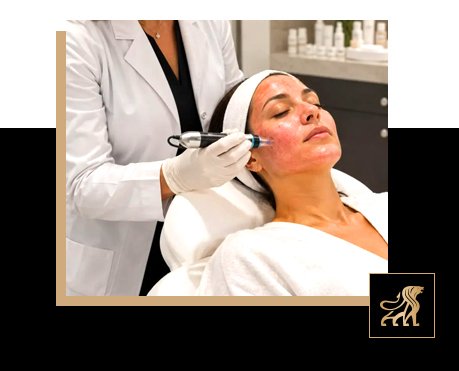
Both treatments promise the same broad outcome — smoother, more youthful, regenerated skin — and both work by triggering your skin’s own repair process rather than masking a concern on the surface. That similarity is exactly why the two get confused so often. Here’s what actually separates them, and which one tends to suit which concern.
How Vampire Facial (PRP) Works
A Vampire Facial combines microneedling with Platelet-Rich Plasma, or PRP, drawn from your own blood. The plasma is rich in growth factors that, once reapplied to the skin through the micro-channels created by microneedling, help stimulate collagen production and support tissue repair. Because it uses your own blood, it’s a biologically familiar input for your skin to work with.

How Exosome Facials Work
Exosomes are tiny particles released by cells that carry proteins, growth factors, and genetic material used for cell-to-cell communication. Rather than coming from your own blood, exosome treatments typically use lab-processed exosomes (often derived from stem cells) applied topically or via microneedling, where they act as a signal telling your skin cells to accelerate their own repair processes.
The core difference: PRP uses your body’s own healing components, concentrated and reapplied. Exosomes are a more concentrated, lab-refined messaging signal, not derived from your own blood.

What the Research Actually Shows
This isn’t just marketing positioning — head-to-head research is starting to back up meaningful differences between the two. A split-face clinical trial published via Wiley/PMC compared adipose stem-cell-derived exosomes against PRP for photoaged facial skin after radiofrequency microneedling, applying one treatment to each side of the same person’s face to directly compare results. Studies like this reflect a broader trend in aesthetic dermatology: exosomes are being positioned as a next-generation option worth comparing directly against PRP, rather than dismissed as an unproven fad.
Side-by-Side Comparison
Factor | Vampire Facial (PRP) | Exosome Facial |
Source | Your own blood | Lab-processed exosomes (often stem-cell derived) |
Mechanism | Delivers concentrated growth factors from your plasma | Signals skin cells to accelerate their own repair |
Best known for | Collagen stimulation, overall skin rejuvenation | Post-procedure recovery, skin quality, texture |
Blood draw required | Yes | No |
Evidence base | Established over more than a decade of clinical use | Newer, with growing but still-limited large-scale data |
Typically paired with | Microneedling | Microneedling or topical application |
When a Vampire Facial Tends to Be the Better Fit
PRP has a longer track record in aesthetic medicine, with more clinical data behind its use for collagen stimulation, fine lines, and overall skin rejuvenation. A systematic review published via PMC found consistent evidence supporting PRP’s use in skin rejuvenation, with studies reporting improvements in skin texture, appearance, and fine lines across a substantial body of research. If you want a treatment with more established, well-documented outcomes, and you’re comfortable with the blood draw step, PRP is generally the more proven starting point.
When an Exosome Facial Tends to Be the Better Fit
Exosome treatments are increasingly used to support and potentially accelerate recovery after another procedure — most often microneedling — rather than as a first-line standalone treatment. A review in the Journal of Clinical and Aesthetic Dermatology notes that exosomes have shown promise in preclinical studies for anti-aging, anti-inflammatory, and wound-healing applications, while also cautioning that large-scale clinical studies are still limited compared to more established treatments like PRP. If your main goal is enhancing results from a treatment you’re already doing, or you’d prefer to skip the blood draw altogether, an exosome-based approach may be the better complement — with the understanding that its evidence base is still catching up.
Can They Be Combined?
Not usually in the same session, but some providers do use them at different points in a broader treatment plan — for example, PRP for a foundational rejuvenation protocol, with exosomes layered in later to support recovery after a resurfacing procedure. Whether combining them makes sense depends heavily on your specific skin goals and history, which is exactly the kind of decision worth making with a proper consultation rather than picking based on which sounds more advanced.
The Honest Bottom Line
Neither treatment is universally “better” — they’re different tools addressing overlapping but distinct needs. PRP has the longer evidence base and is a solid, well-established choice for general skin rejuvenation. Exosomes are a genuinely promising, newer option, particularly well-suited as a recovery accelerant alongside another procedure, though the research base is still growing.
How Augusté Skin Approaches This Decision
At Augusté Skin, the choice between PRP and exosomes starts with your specific skin goals and treatment history, not a fixed package. Depending on what you’re looking for, that could include:
- Vampire Facial — our PRP-based microneedling treatment for collagen stimulation and overall rejuvenation
- ASCE+ Derma Signal SRLV Exosomes — our exosome treatment, often paired with microneedling to support recovery and results
- Dermapen 4 — the microneedling base both treatments are frequently combined with
- If scarring or texture is your main concern either way, our Acne & Acne Scars treatment line covers how PRP and exosomes fit into a broader scar-treatment plan

Book a consultation with Augusté Skin →
Frequently Asked Questions
1. Is exosome therapy safer than PRP since it doesn’t need a blood draw?
Not necessarily safer — just different. PRP has a long safety track record using your own blood; exosome safety depends on the sourcing and regulation of the product used, which is why choosing a reputable provider matters for either treatment.
2. Which gives faster results?
Neither delivers overnight results — both work by triggering the skin’s own repair process, which unfolds over several weeks and multiple sessions.
3. Can I switch from PRP to exosomes later if I don’t see results?
Yes, and many people do explore both over time as part of an evolving skincare plan, rather than committing to one permanently.
4. Do both require microneedling?
PRP is almost always paired with microneedling for delivery. Exosomes can be applied topically or via microneedling, giving slightly more flexibility in how they’re used.
Not sure which one fits your skin goals? Book a consultation at Augusté Skin and get a recommendation based on your actual skin, not a trend.