
Best HydraFacial in Bangalore | Augusté Skin Facial Bangalore
If you’ve been researching non-surgical skin tightening in Bangalore, you’ve probably come across two very different-sounding names — EndoLift and HIFU (Liftera 2). Both promise firmer, lifted skin without surgery. But they work in fundamentally different ways, and that difference matters more than the marketing usually lets on.
Why Skin Loses Firmness in the First Place
Before comparing devices, it helps to understand what they’re actually trying to fix. Collagen is the structural protein that keeps skin firm, elastic, and youthful-looking. According to a peer-reviewed review of aging human skin, skin collagen density decreases at roughly 1% per year throughout adult life — a slow, steady decline that eventually shows up as sagging, laxity, and a less defined jawline. Both HIFU and EndoLift exist to interrupt that process by triggering the skin to produce fresh collagen, just through very different delivery methods.
Two Different Technologies, One Goal
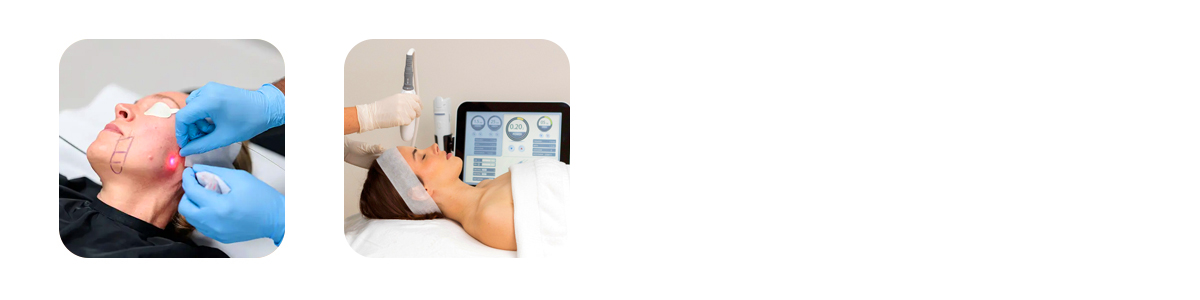
EndoLift is a 1470nm diode laser delivered through an ultra-thin optical fiber that’s inserted under the skin through a tiny needle entry point, usually with local anaesthesia or numbing cream. The fiber heats the deeper skin layers directly, stimulating collagen and mildly reducing small fat pockets. A systematic review of the endo-lift laser method found favourable efficacy and safety for facial rejuvenation, skin laxity and lifting — but by design, it’s a minimally invasive procedure: there’s a needle, an anaesthetic step, and a small entry point in the skin.
HIFU (Liftera 2) uses Microfocused Ultrasound delivered entirely from outside the skin — no needles, no incisions, no anaesthesia. The ultrasound energy is focused at precise depths to trigger the same kind of collagen remodelling, without ever breaking the skin’s surface. A systematic review of microfocused ultrasound for facial skin tightening confirms this non-invasive approach reliably stimulates collagen production for lifting and tightening.
In short: both aim for the same collagen-driven result. The real difference is how the energy gets there — through the skin, or under it.
HIFU vs EndoLift: Quick Comparison
Feature | HIFU (Liftera 2) | EndoLift |
Technology | Microfocused Ultrasound (MFU/HIFU) | 1470nm diode laser via subdermal fiber |
Invasiveness | Fully non-invasive (no needles) | Minimally invasive (needle entry point) |
Anaesthesia | Not required | Local anaesthesia or numbing cream required |
Downtime | Minimal, same-day return to routine | Mild swelling/bruising possible, 24–72 hrs |
Best for | Mild-moderate skin laxity, jawline, neck | Mild-moderate laxity + small fat pockets |
Maintenance | Usually every 6–12 months | Varies by provider |

Is “Melanin-Safe” Actually a Differentiator?
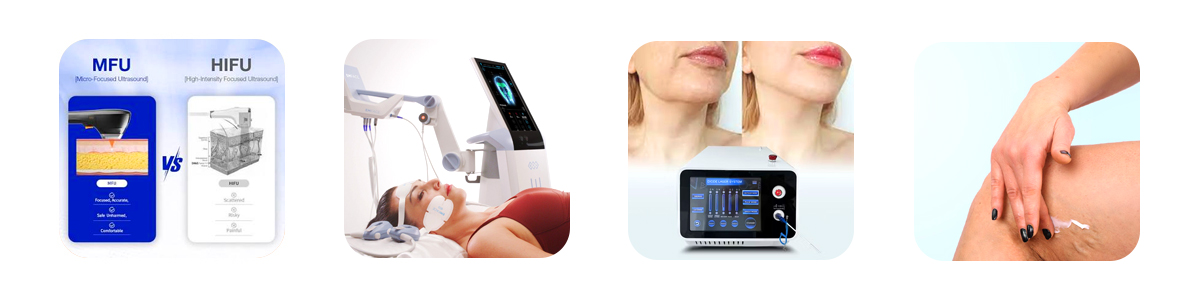
You may have seen EndoLift marketed as safe for all skin tones because it doesn’t target melanin. That’s accurate — but it’s not unique to EndoLift. HIFU’s ultrasound energy doesn’t target melanin either, since it works through mechanical heating at set tissue depths rather than light absorption by pigment. Both technologies are generally considered appropriate across skin tones for this reason — the real question isn’t which one avoids melanin, it’s whether you’re comfortable with a needle and local anaesthesia to get there.
What to Expect During a HIFU Session at Augusté Skin
A typical session starts with a facial assessment to map the areas that need lifting — usually the jawline, under-chin area and neck. A conducting gel is applied, and the ultrasound applicator is moved across the treatment area in a grid pattern, delivering focused energy at set depths. Most patients describe brief warmth or tingling rather than pain, and the session itself typically takes 45–60 minutes depending on the area covered. You can see real examples of treatment outcomes in the Augusté Skin gallery and read patient experiences on the testimonials page.
How Many Sessions Will You Need — and How Long Do Results Last?
Collagen remodelling isn’t instant. Most patients notice initial tightening within a few weeks, with full results building gradually over 2–3 months as new collagen forms. A single session is often enough for mild to moderate laxity, with maintenance typically recommended every 6–12 months to sustain results as natural collagen production continues to decline with age.
Combining Skin Tightening With Other Treatments
HIFU is rarely used in isolation for a full rejuvenation plan. At Augusté Skin, it’s often paired with:
- VAMP™ Sculpt + Glow Protocol — combining lymphatic sculpting, HIFU, and pigment-correcting laser toning for a fuller lift-and-brighten result
- Dermapen 4 microneedling — to improve texture, pores, and fine lines alongside tightening
- HydraFacial — for hydration and glow between tightening sessions

This layered approach is discussed further in our posts on HIFU as a preventive anti-ageing treatment in your 20s and HydraFacial combined with HIFU and Genesis Laser.
Why Patients at Augusté Skin Choose the Non-Invasive Route
At Augusté Skin, our philosophy is facial preservation, not dramatic intervention. For most patients with mild to moderate skin laxity, HIFU delivers meaningful lifting and tightening without a single needle — which means no anaesthesia, no entry points to heal, and a same-day return to your routine.
That said, EndoLift’s ability to also address small, localised fat pockets is a genuine advantage in specific cases — like submental fullness — where ultrasound alone may not be the right tool. The right choice really does depend on your specific concern, which is why an in-person assessment matters more than the device name.
Book a Skin Tightening Consultation
Not sure which approach fits your skin? Book a consultation via WhatsApp, call +91 81500 09900, or visit the contact page for directions.
Augusté Skin, No. 11/5, Hayes Road, Sycon Solitaire, Ground Floor, Bangalore 560025. Get directions on Google Maps
Frequently Asked Questions
1. Is EndoLift more effective than HIFU?
Not necessarily — both stimulate collagen through heat-based mechanisms and show good efficacy for mild to moderate skin laxity. EndoLift’s advantage is treating small fat pockets alongside skin tightening; HIFU’s advantage is that it’s completely non-invasive.
2. Does EndoLift hurt more than HIFU?
EndoLift requires a local anaesthetic injection (a brief sting) before the fiber is inserted. HIFU doesn’t involve needles or anaesthesia, so most patients find it more comfortable.
3. Which one has less downtime?
HIFU typically involves no real downtime — most patients return to their day immediately. EndoLift can cause mild swelling or bruising for 24–72 hours around the entry points.
4. Is one safer for darker skin tones than the other?
Both are generally considered appropriate across skin tones, since neither technology targets melanin. Individual suitability should still be confirmed at a consultation.
5. At what age should I consider HIFU?
There’s no fixed age — it depends on your skin’s laxity rather than a number. Some patients start in their late 20s or early 30s as a preventive measure, while others begin once sagging is more visible.
6. How do I know which treatment is right for me?
It depends on your specific concern — general skin laxity is well suited to HIFU, while laxity combined with small fat pockets may benefit from a minimally invasive approach. A proper skin and facial assessment is the best starting point.